
Configure Mirakl Marketplace
The Mirakl Odoo Connector provides a seamless integration between your Odoo system and the Mirakl marketplace platform. Once configured, users can synchronize master data, automate product listings, push real-time inventory updates, and manage end-to-end order processing directly within their database.
Setup in Mirakl
This section provides a guide to preparing your Mirakl account for the Odoo integration.
Let’s begin with the account setup and gathering the necessary authentication details.
Account Setup & API Credentials
Before configuring the connector within Odoo, you must have an active Mirakl seller account and generate your API credentials directly from your Mirakl seller portal.
Sign in to your Mirakl account.
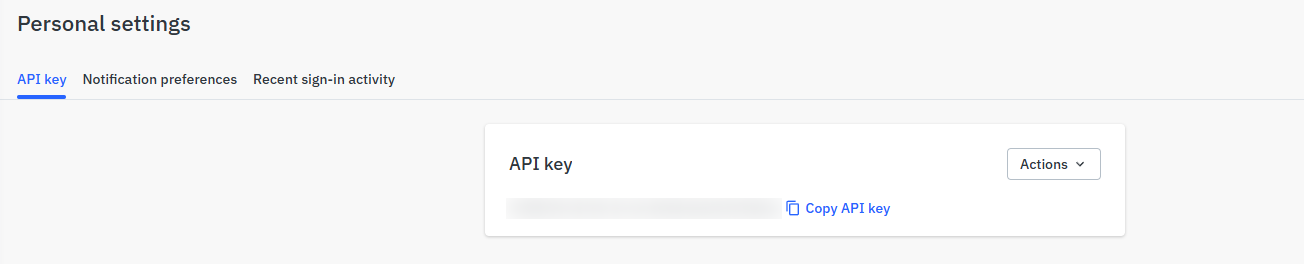
Click on your User ID (typically your email address) located in the interface.
Navigate to .
Click the Generate a new key button to create your unique authentication token.
Copy the generated API Key, as you will need to paste this into Odoo.
Note your Marketplace URL (the web address you use to log in) and your Shop ID (useful if you are managing multiple shops under a single Mirakl environment), as these are also required to establish the connection.
Setup in Odoo
This document provides a complete step-by-step guide to configure and use the Mirakl connector in Odoo.
Let’s begin with the configurations.
Create a Mirakl instance in Odoo
To create your Mirakl instance in Odoo, navigate to and click on CREATE.
Name: Choose a meaningful name for your Instance (e.g.,
Best Buy).Marketplace: Select Mirakl from the drop-down menu.
Credentials
To authenticate the connection between Odoo and your Mirakl marketplace, you must provide your specific API details.
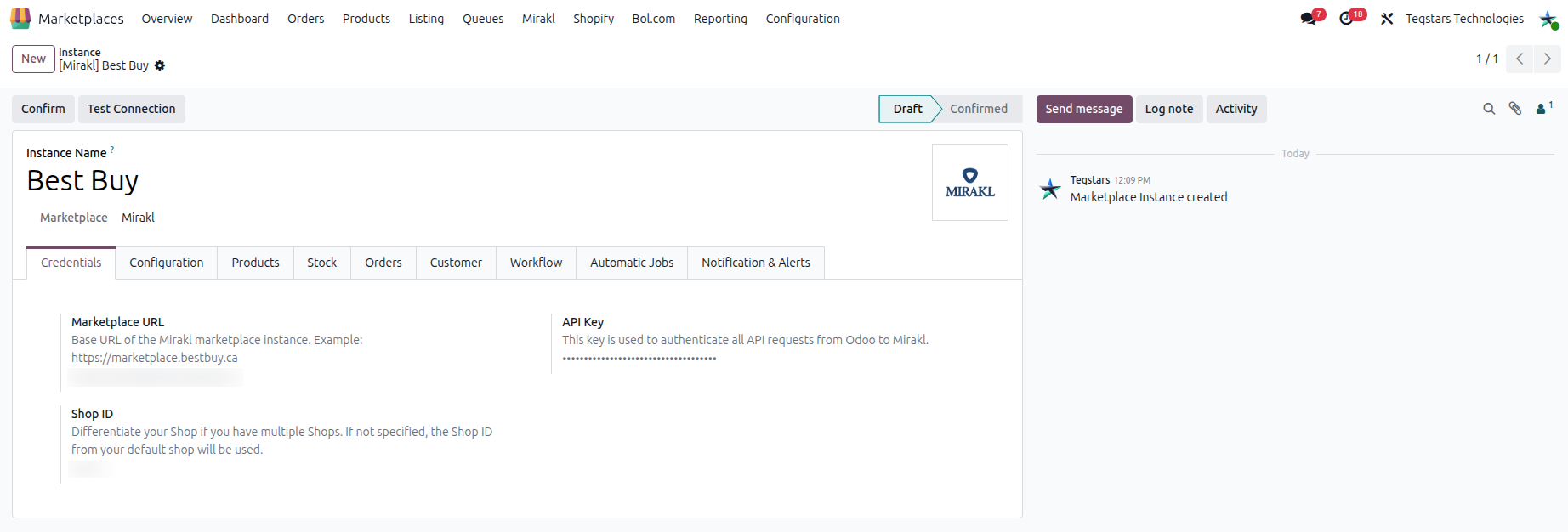
Navigate to the Credentials tab on your Mirakl instance record.
Fill in the following fields using the information from your Mirakl Seller Portal:
Marketplace URL: Enter the base URL of the specific Mirakl marketplace instance you are connecting to (e.g.,
https://marketplace.bestbuy.ca).API Key: Enter the unique key used to authenticate all API requests from Odoo to Mirakl. You can typically generate or find this in the user settings of your Mirakl portal.
Shop ID: Use this to differentiate your shop if you manage multiple shops under one account. If left blank, the connector will automatically use the Shop ID from your default shop.
Note
If you do not have these API credentials yet, please refer to the Account Setup & API Credentials section for a step-by-step guide on how to generate them.
Test the Connection
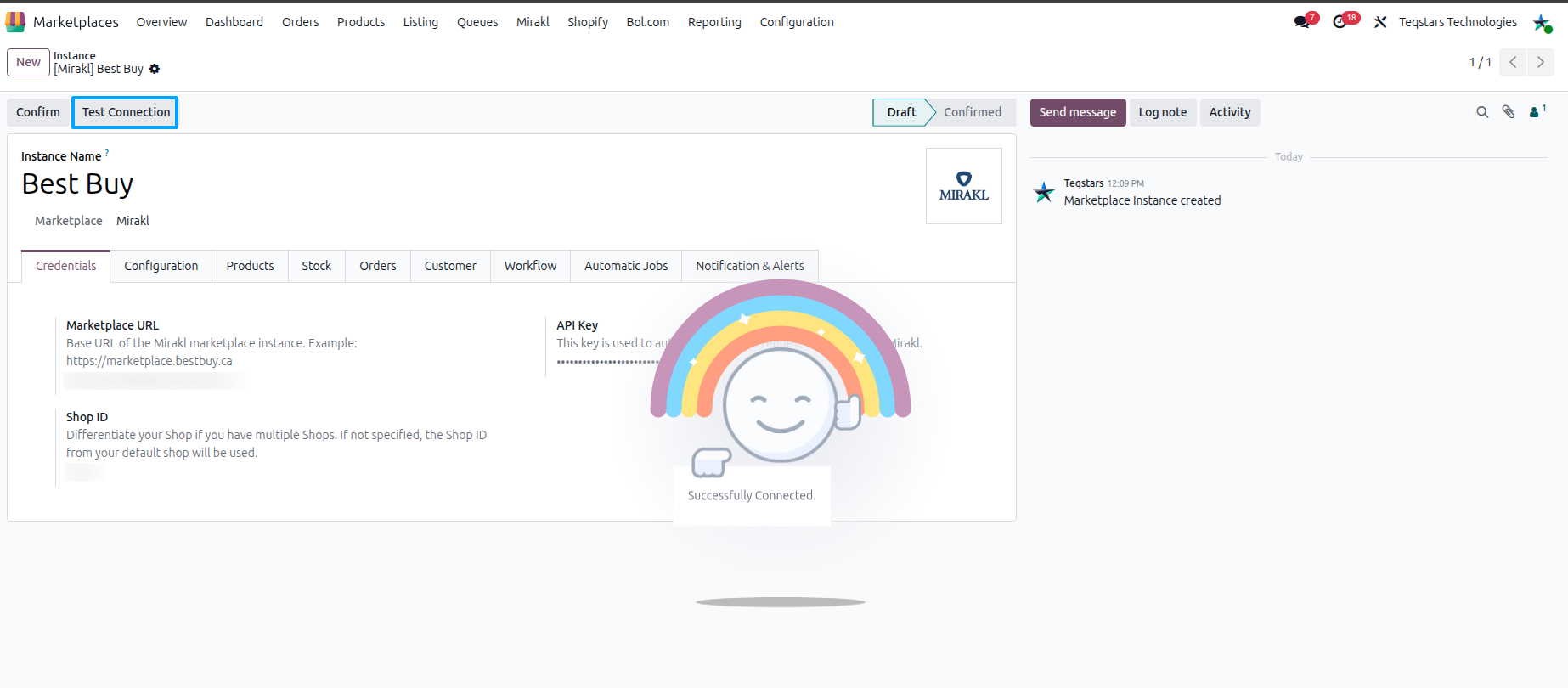
Click Test Connection in your Odoo instance.
If configuration is correct, the connection will succeed.
You can now continue with further configuration.
Let’s begin with the instance configuration process for the Mirakl Odoo Connector. By following configurations you’ll be able to set up and customize the integration according to your business needs. Let’s get started!
Last Processed On
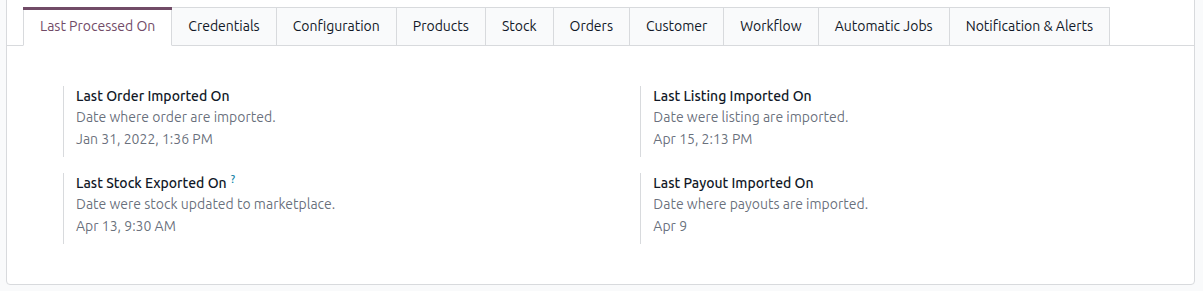
Last Processed On refers to date that indicates the last time a specific operation or task was processed or executed. It typically represents the date and time of the most recent successful execution of a particular operation.
In most cases, the Last Processed On date is set when the Automatic Jobs are executed.
Configurations
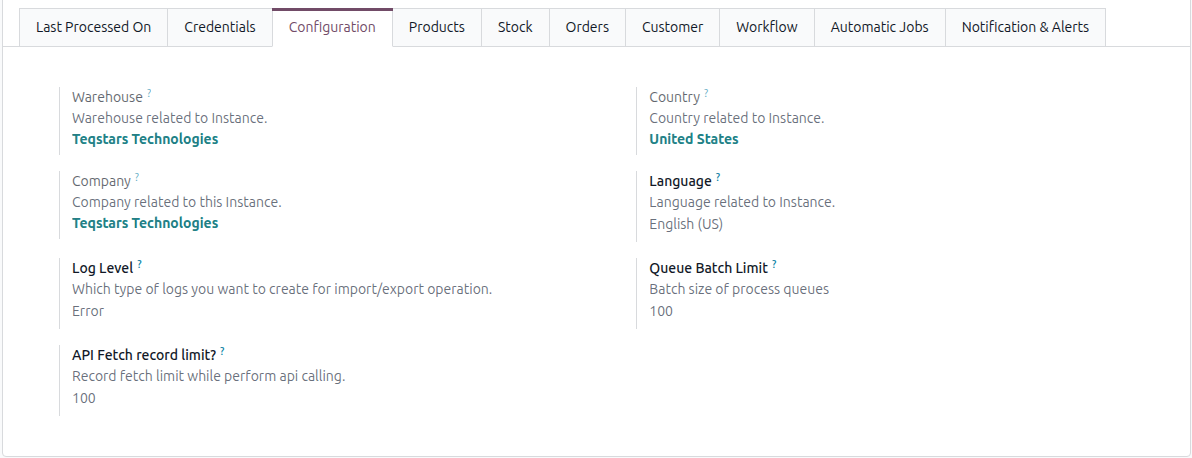
Under the Configuration tab, you can define the core operational settings for your Mirakl instance:
Warehouse: Select the Odoo warehouse related to this instance. This warehouse will be utilized for stock operations and order processing for this marketplace.
Company: Choose company related to instance.
Log Level: choose which type of log level would you like to have. You can choose between
ALL,SUCCESS, orError. default to Error. The system will retrieve logs for each marketplace operation. To view the logs, navigate toAPI Fetch record limit: Define the maximum number of records to fetch per API call (the default is 100).
Country: Select the country related to the instance (e.g., United States).
Language: Select the language related to the instance (e.g., English (US)).
Queue Batch Limit: default to 100 records. we aren’t suggesting to change this.
Note
To modify the Log Level and Queue Batch Limit, activate the developer mode and navigate to and click on Configuration tab.
Product Configurations
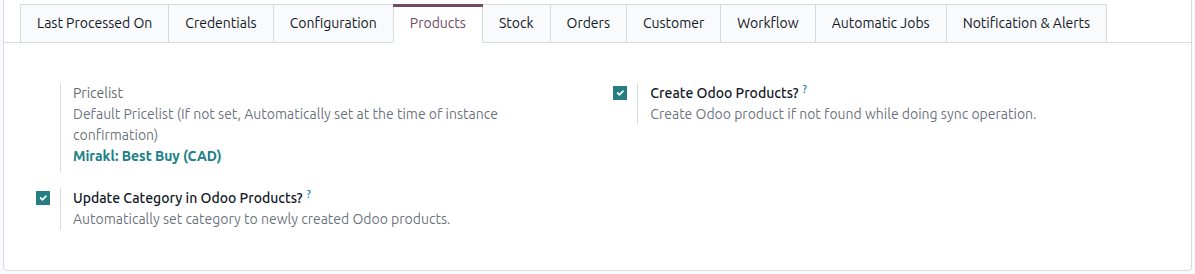
Under the Products tab, you can configure how the connector handles pricing and product creation during synchronization:
The Mirakl Odoo Connector automatically imports your marketplace offers and maps them to your local Odoo product catalog.
In the background, the connector dynamically links Mirakl offers to existing Odoo products strictly by comparing their SKU. This is the default and only supported method for product matching, meaning no manual mapping rules or alternative configurations are required.
Tip
Avoid mismatched listings by ensuring no duplicate SKUs exist within your Odoo database. Because the connector uses the SKU as its sole matching criteria, maintaining unique SKUs is essential for accurate product imports.
Pricelist: Pricelist refers to a pricing configuration that determines the prices of products during the product sync operation between Mirakl and Odoo. When prices are imported/exported during synchronization, this pricelist is used to set the appropriate prices. Keep it
blankif you don’t have Mirakl pricelist so that system will create a new pricelist automatically.Create Odoo Products?: When enabled, the connector will automatically create a new Odoo product template if a matching product is not found (using the SKU) while performing a sync operation. This ensures your Odoo catalog is easily populated with new marketplace listings.
Tip
If you already have existing products in your Odoo ERP system, it is not recommended to enable the Create Odoo Products? option in the Instance.
Update Category in Odoo Products?: When enabled, the system will automatically set the corresponding Mirakl product category on any newly created Odoo products.
Stock Configurations
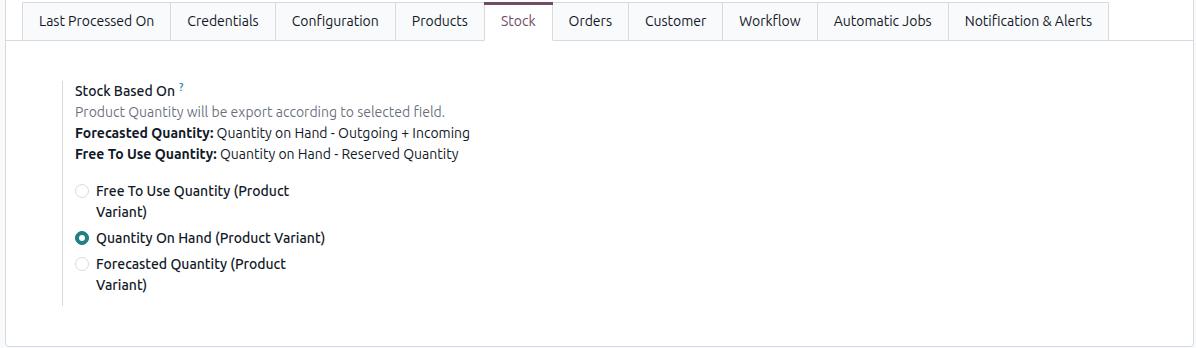
Stock Based On: When exporting Inventory from Odoo to Mirakl, you can choose
Free To Use Quantity,Quantity On HandorForecasted Quantityconfiguration based on your requirements, ensuring accurate inventory management between Mirakl and Odoo.Forecasted Quantity (Quantity on Hand - Outgoing + Incoming):
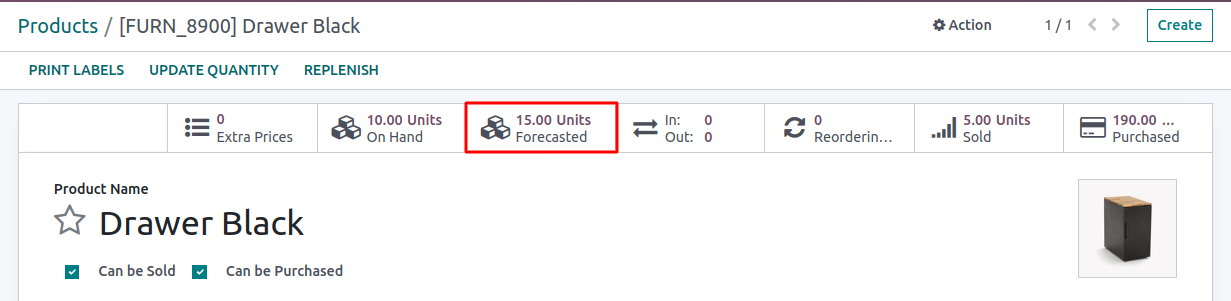
Quantity On Hand: The exact physical stock currently in your warehouse.
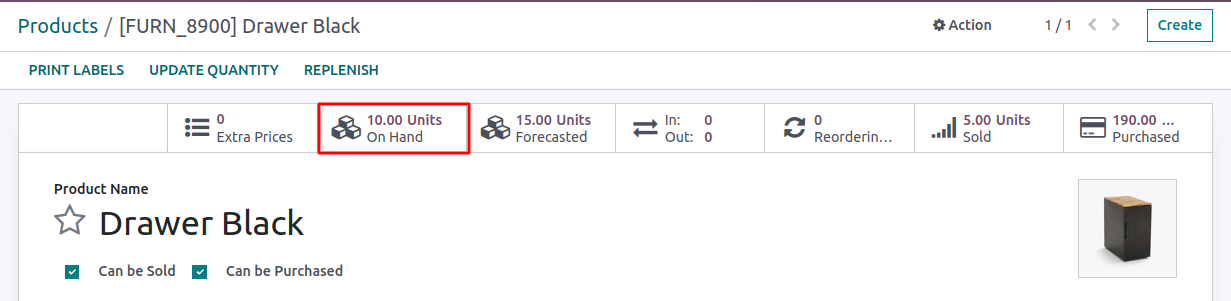
Free To Use Quantity (Quantity on Hand - Reserved Quantity):

Orders Configurations
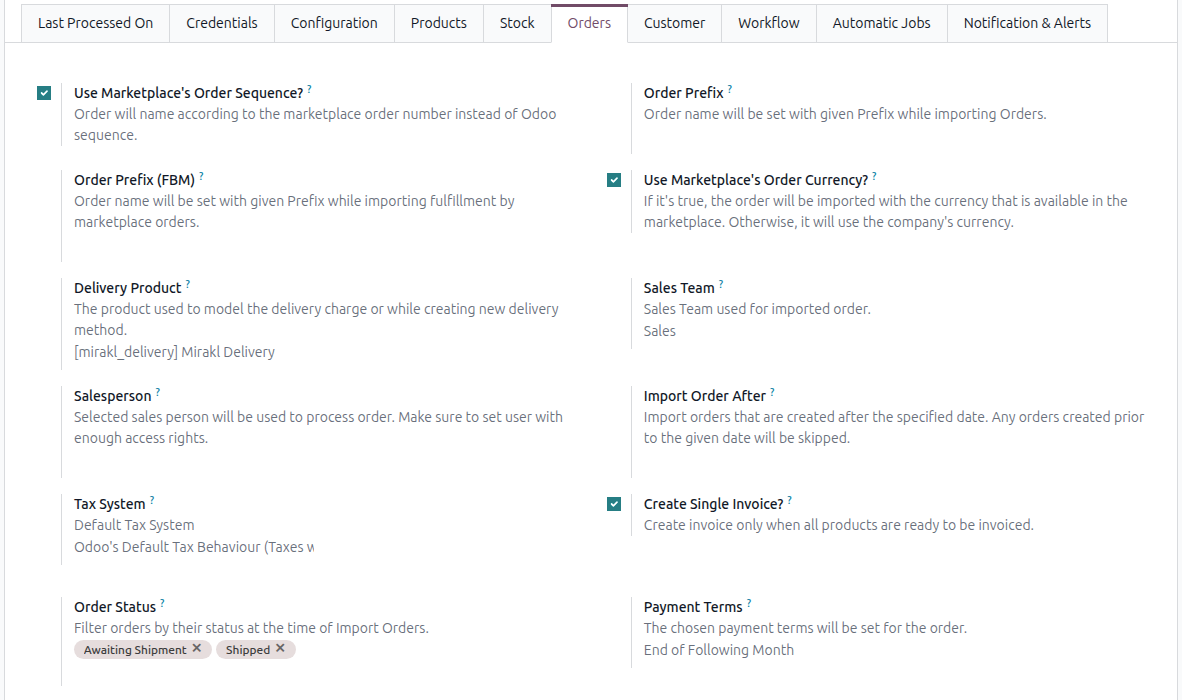
Use Marketplace’s Order Sequence?: Allows you to name orders in Odoo based on the Mirakl order number rather than using the default Odoo sequence. This ensures that the order names in Odoo correspond directly to the order numbers generated by the Mirakl platform, providing consistency and easier cross-referencing between Odoo and the Mirakl.
Order Prefix: Allows you to specify a prefix that will be added to the names of imported orders. When importing orders from Mirakl to Odoo, the connector will automatically set the order name with the given prefix. This helps to easily identify and distinguish the imported orders in Odoo.
Order Prefix (FBM): Prefix specifically for fulfillment by merchant (FBM) orders.
Example
if you set the prefix as
MK-, an order number/name “12345” will becomeMK-12345after importing.
Use Marketplace’s Order Currency?: If enabled, the order will be imported using the exact currency provided by the Mirakl marketplace. If disabled, it will default to your Odoo company’s currency.
Delivery Product (Only visible in developer mode): The product used to model the delivery charge for orders or while creating new delivery method.
Sales Team: By configuring this, you can ensure that all imported orders from Mirakl are automatically assigned to the specified default Sales Team in Odoo.
Salesperson: Select a salesperson who will be responsible for processing the orders received from Mirakl. It is important to ensure that the assigned user has sufficient access rights in Odoo.
Import Order After: You can import orders from Mirakl that have been generated after a particular date. By defining this date, any orders generated prior to the specified date will be skipped during the import process.
Tax System: Define how taxes are calculated and applied to imported Mirakl orders. You have three distinct behaviors to choose from:
Odoo’s Default Tax Behaviour (Taxes will be taken from Odoo Product): With this option selected, Odoo will use the tax information defined on the Odoo products and related fiscal rules. When importing orders from Mirakl, the connector ignores Mirakl tax lines and applies the taxes configured on the corresponding Odoo products. This keeps tax calculation fully aligned with your Odoo tax configuration.
Follow Marketplace Tax (no fiscal position mappings): With this option, the connector follows the tax amounts coming from Mirakl. For each tax in the Mirakl order, Odoo looks for a matching tax; if it does not exist, a new tax can be created and linked to the configured Tax Account fields. The resulting Odoo taxes from Mirakl are applied directly on the order and shipping lines without applying any fiscal position mappings.
Follow Marketplace Tax and applies fiscal position mappings: This option also starts from the taxes provided by Mirakl, creating or reusing matching Odoo taxes as needed. After determining the Odoo taxes based on Mirakl tax lines, the connector applies the fiscal position of the order to remap those taxes before posting them on the order lines. This lets you respect Mirakl tax amounts while still using Odoo fiscal position rules for accounting and reporting.
Tax Account: This allows you to specify the account to be associated with a tax when it is created in Odoo. This account is used for recording tax-related transactions and ensures accurate tracking and reporting of tax amounts within your Odoo ERP system. By setting the Tax Account, you can ensure that taxes are properly accounted for and integrated into your financial management processes.
Tax Account on Credit Notes: This allows you to specify the account to be associated with a tax when it is created in Odoo. This account is used for recording tax-related transactions and ensures accurate tracking and reporting of tax amounts within your Odoo ERP system. By setting the Tax Account, you can ensure that taxes are properly accounted for and integrated into your financial management processes.
Tax Rounding: When the Tax Rounding is enabled and set to zero, no rounding will be applied. This feature ensures that tax calculations are accurate and aligned with your specific tax regulations and requirements. By configuring Tax Rounding according to your needs, you can maintain precision in tax calculations within the Odoo Mirakl Connector.
Create Single Invoice? (Only visible in developer mode): If a single invoice should be created once all items in an order are available for invoicing. When set to True (default), the invoice is generated only after all products are ready. If set to False, invoices can be created separately for each product as it becomes ready.
Order Status: Filter which orders are fetched during the import process based on their current fulfillment status in Mirakl. By default, this is typically set to statuses like
Awaiting Shipment.Payment Terms: Specify the default payment terms that will be automatically applied to all imported Mirakl sales orders.
Customer Configurations

Receivable Account: This allows you to specify the default account for receivables when creating customers. By setting this field to Account Receivable instead of the default account, you ensure that the receivable transactions, such as invoices and payments, associated with the customer are correctly accounted for in the Odoo ERP system.
Create Company Contact?: When a contact is being created, the connector checks if there is a corresponding company. If found, it automatically generates a company contact, ensuring that the company’s information is properly recorded and linked to the contact in Odoo. This feature helps maintain comprehensive and organized company contact records within the system.
Workflow Configurations
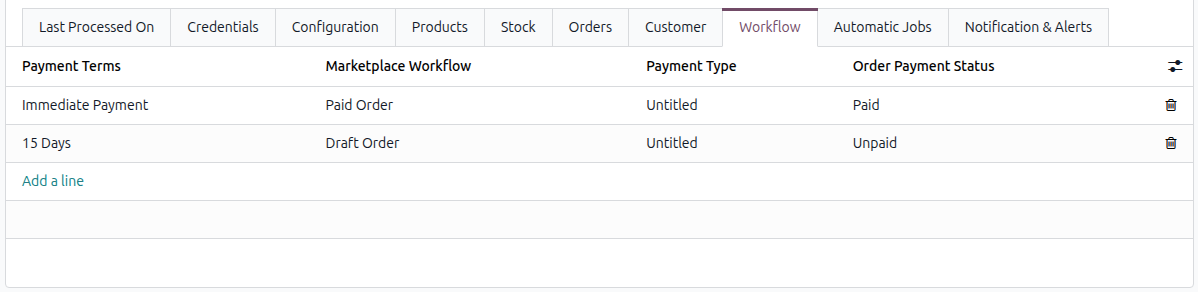
Workflow is a configuration setting used in the Mirakl Odoo Connector that enables the automatic processing of orders from Mirakl. This workflow automates various actions, including confirming orders, creating invoices, validating invoices, and registering payments.
By setting up the Marketplace Workflow, you can streamline the order processing cycle and save time by eliminating manual interventions. The workflow ensures that orders from marketplaces are seamlessly processed and managed within your Odoo system.
Payment Terms: Payment Terms are set in the order at the time of creation and specify when and how the customer is expected to make the payment for their purchase.
Marketplace Workflow: It enables the automatic processing of orders from marketplaces. This workflow automates various steps, including confirming orders, creating invoices, validating invoices, and registering payments.
Payment Type: Select the Mirakl payment type / gateway that triggers this workflow. Payment types are imported automatically from Mirakl orders.
Order Payment Status: Define the financial status required from Mirakl to trigger this workflow, such as
PaidorUnpaid.
See also
To learn more about the details and configuration options of the Marketplace Workflow, please refer to the following link: How to configure Marketplace Workflow?
Automatic Jobs Configurations
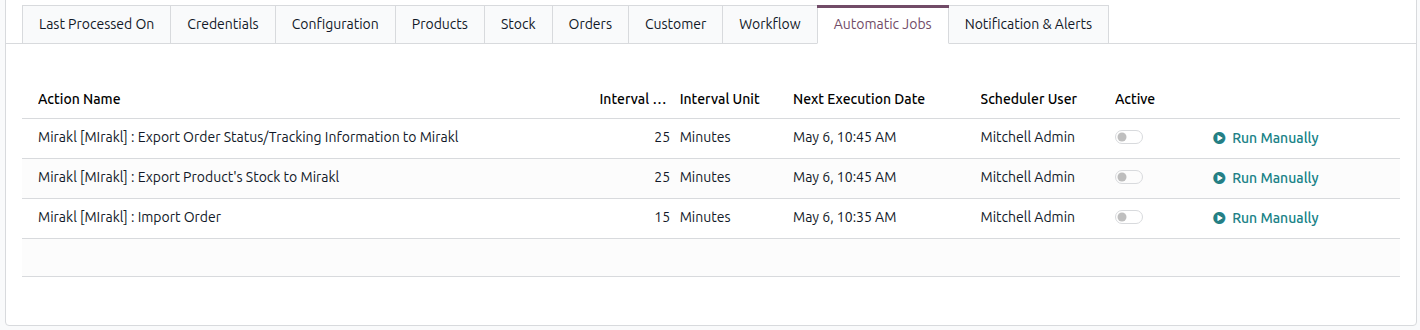
Automatic Jobs Configurations allow for the automation of various tasks related to exporting and importing data between Mirakl and Odoo. These jobs are scheduled to run automatically at specified intervals to keep the data synchronized and up to date. You can configure Interval Number, Interval Unit, and Active for each job. Here’s an explanation of each Automatic Job.
For each job, you can customize the Interval Number and Interval Unit (e.g., every 15 minutes, or every 1 day). Toggle the Active switch to enable or disable a job, or click the Run Manually button to execute a synchronization instantly.
Available Scheduled Actions
- Export Order Status/Tracking Information to Mirakl:
This automatic job enables the automatic export of order status and tracking information from Odoo to Mirakl.
It ensures that the order updates, such as shipment status and tracking numbers, are reflected accurately in Mirakl.
- Export Product’s Stock to Mirakl
This automatic job the connector automatically exports the inventory levels of products from Odoo to Mirakl.
It helps keep the product stock information synchronized between the two platforms, ensuring accurate stock availability on your Mirakl store.
Stock Based On configuration will be used while export stock.
- Import Order
With this configuration, the connector automatically imports new orders from Mirakl to Odoo.
It ensures that the orders placed by customers on your Mirakl store are seamlessly transferred to Odoo for further processing and fulfillment.
Order configuration and Workflow configuration will be used while import and process orders.
Note
It’s highly recommended not to schedule all your processes to run at the exact same interval because it can consume a significant amount of your system resources. Instead, it’s recommended to gap between them. This helps ensure that your system resources are not overuse and can handle the workload more efficiently.
Notification & Alerts
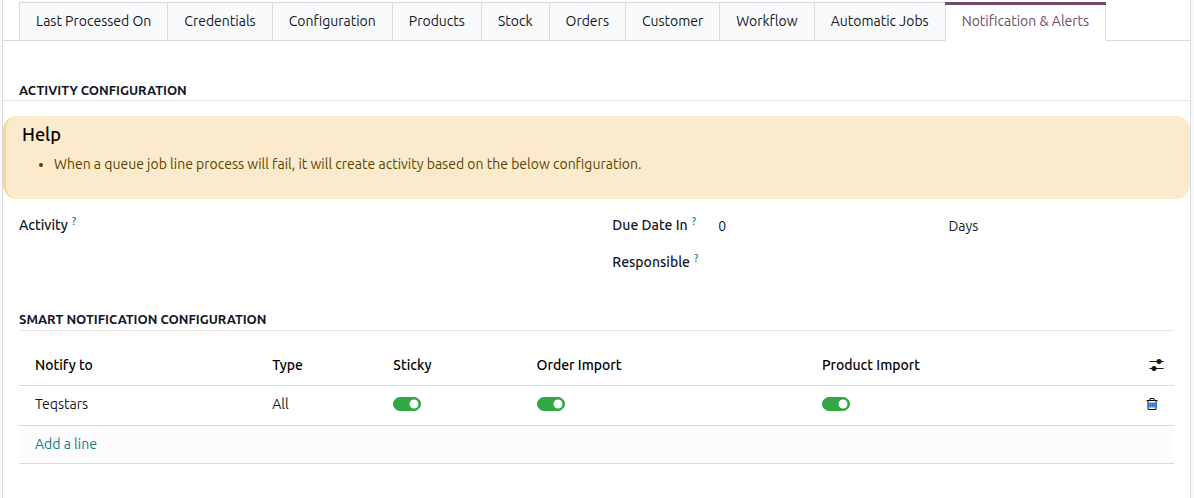
- Activity Configuration
When a queue job line process fails, the system create an activity based on the specified configuration.
By configuring Activity, Due Date In and Responsible the system can automatically generate an activity when a queue job line process fails. The activity will be assigned responsible person and categorized based on the specified type of activity. This helps ensure that appropriate follow-up actions are taken to address and resolve any issues or errors encountered during the Queue job process.
Smart Notification Configuration
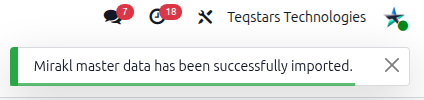
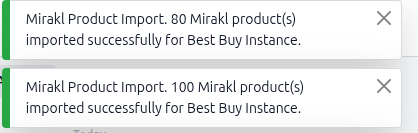
By configuring Smart Notification Configuration, users will receive timely updates regarding the success or failure of order processing and product imports. This helps them stay informed and take appropriate actions promptly when needed.
Confirming Instance
Once you are satisfied with the configuration, click the Confirm button. Upon pressing the Confirm button, your Mirakl Odoo Instance will be confirmed.
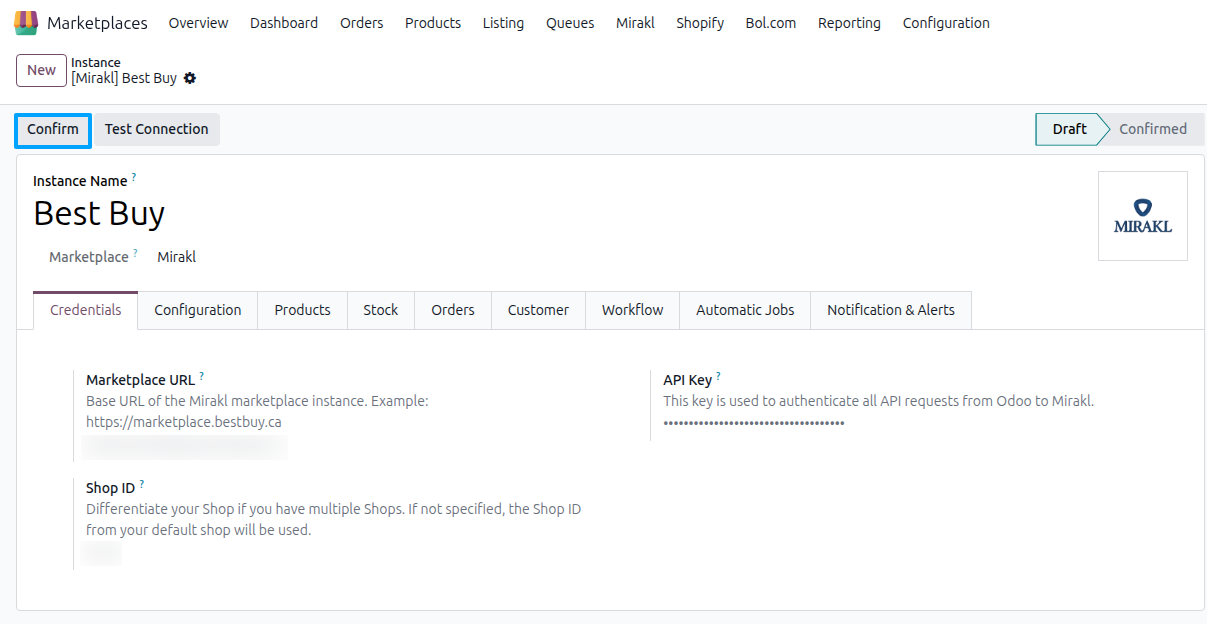
On confirm, the connector automatically:
Validates the API credentials with Mirakl.
Auto-detects and assigns the Shop ID and Currency (creating a matching pricelist if needed).
Imports all Master Data (Logistic Classes, Channels, Shipping Zones, Carriers, Offer States, Product Categories).
Creates three scheduled actions: Import Order (every 15 min), Export Product’s Stock to Mirakl (every 25 min), and Export Order Status/Tracking Information to Mirakl (every 25 min).